
When a child has nothing to write in a journal
Narrow the invitation from a whole day to one moment the child wants to keep. A falling paper bridge or the texture of a leaf can be enough. A child who does not want to write can stop.
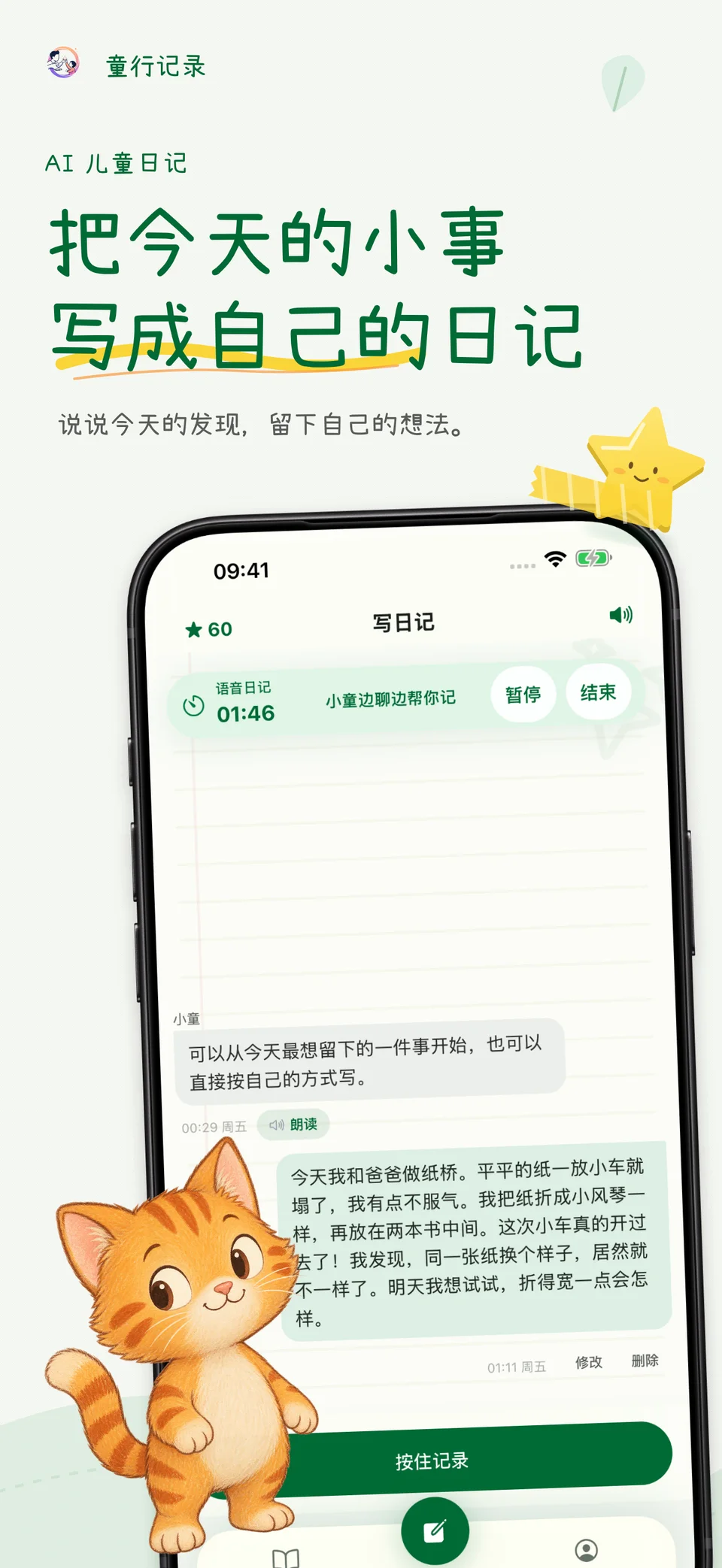
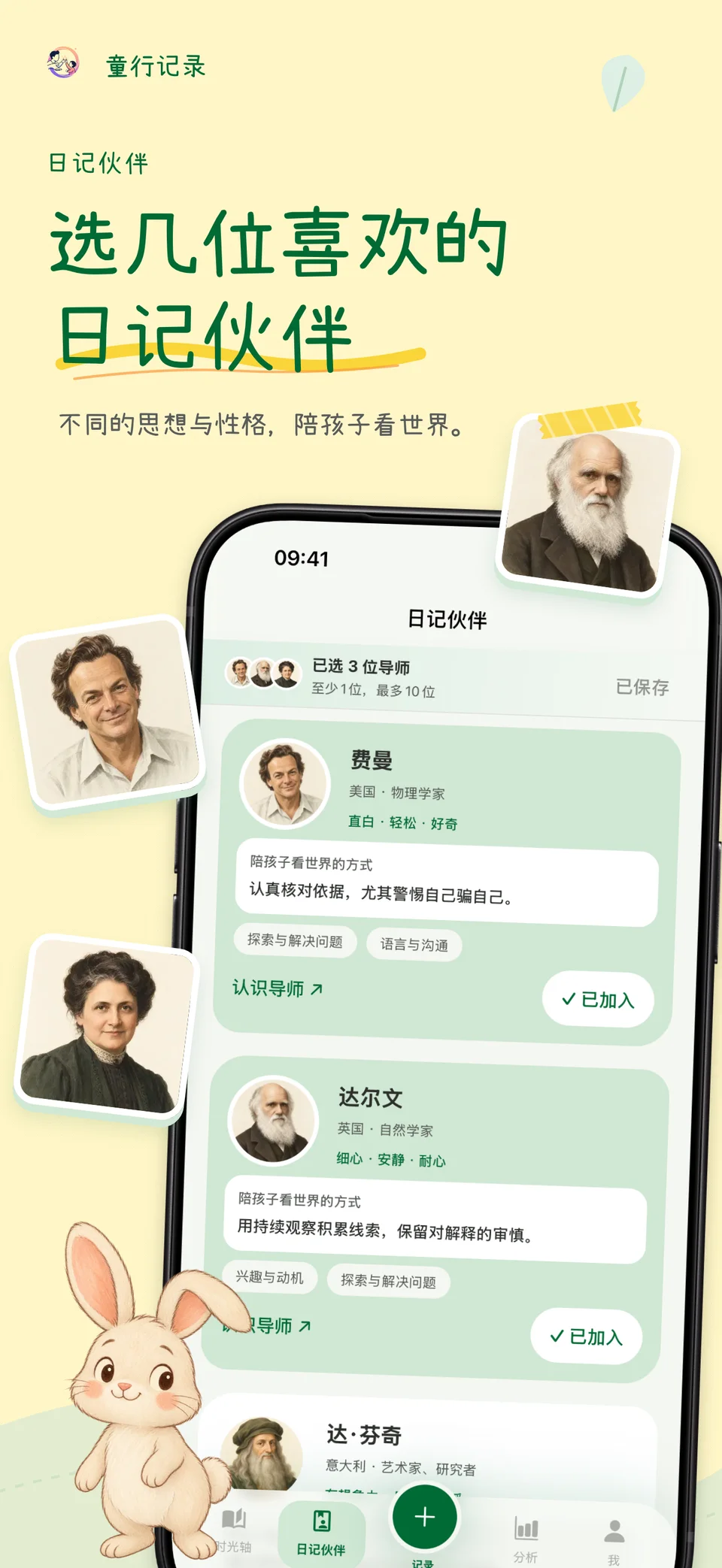
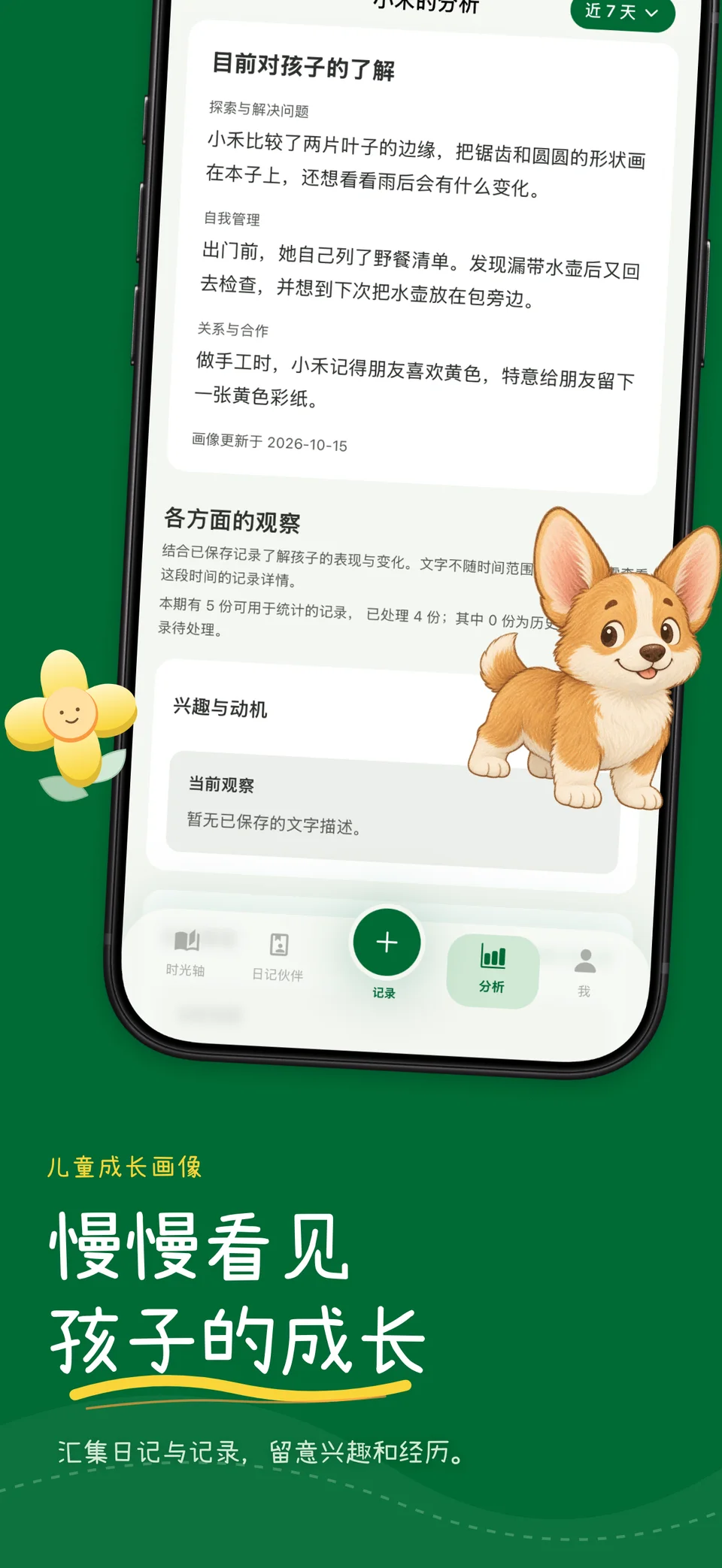
Keep today's discoveries in their own words. Companions make room for reflection, while shared moments help family understand a little more.
Keep the child's own words. Respect their sharing choices.
App previews shown in Chinese with demonstration content.
A journal, a thoughtful reply, a growing picture and little gifts chosen by family.
Scroll to explore. Tap a picture for a closer look.
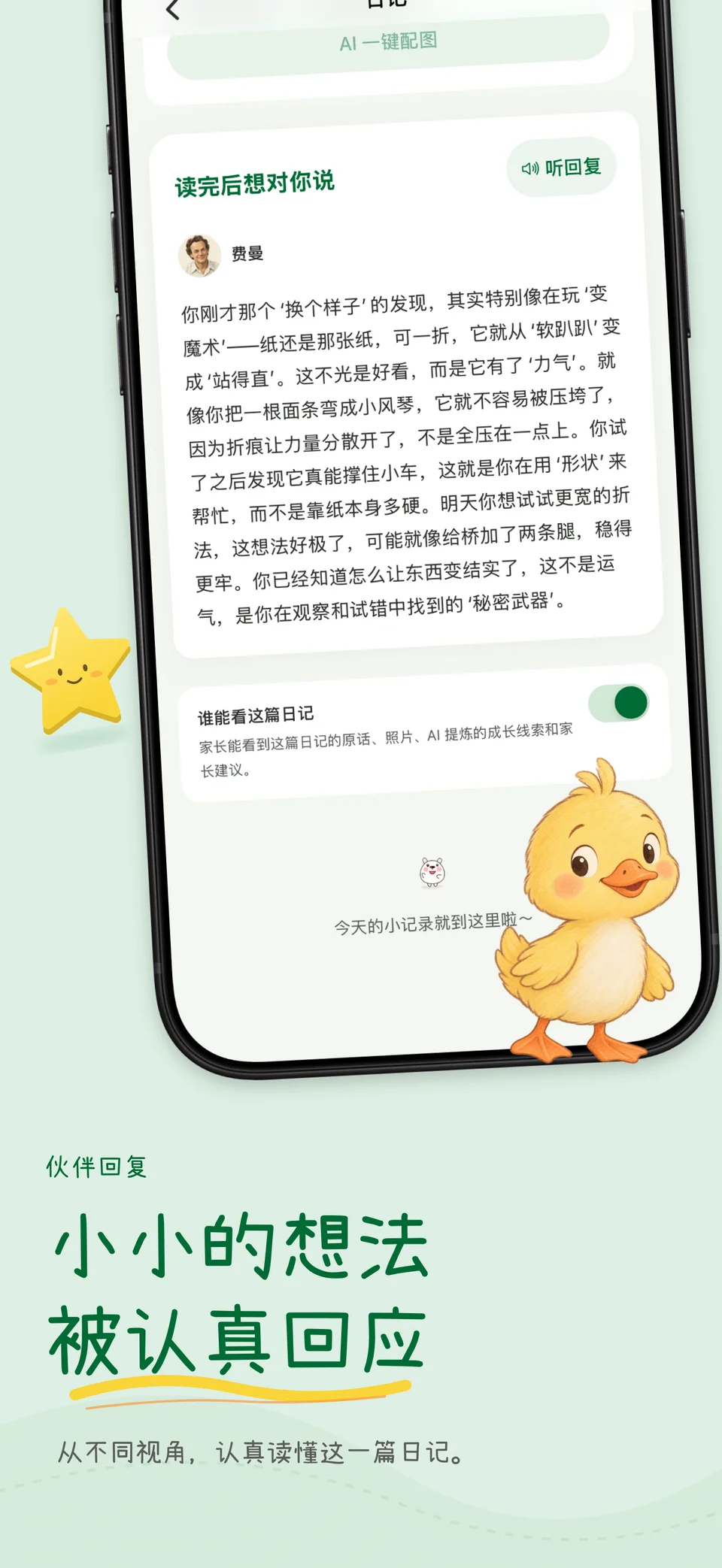
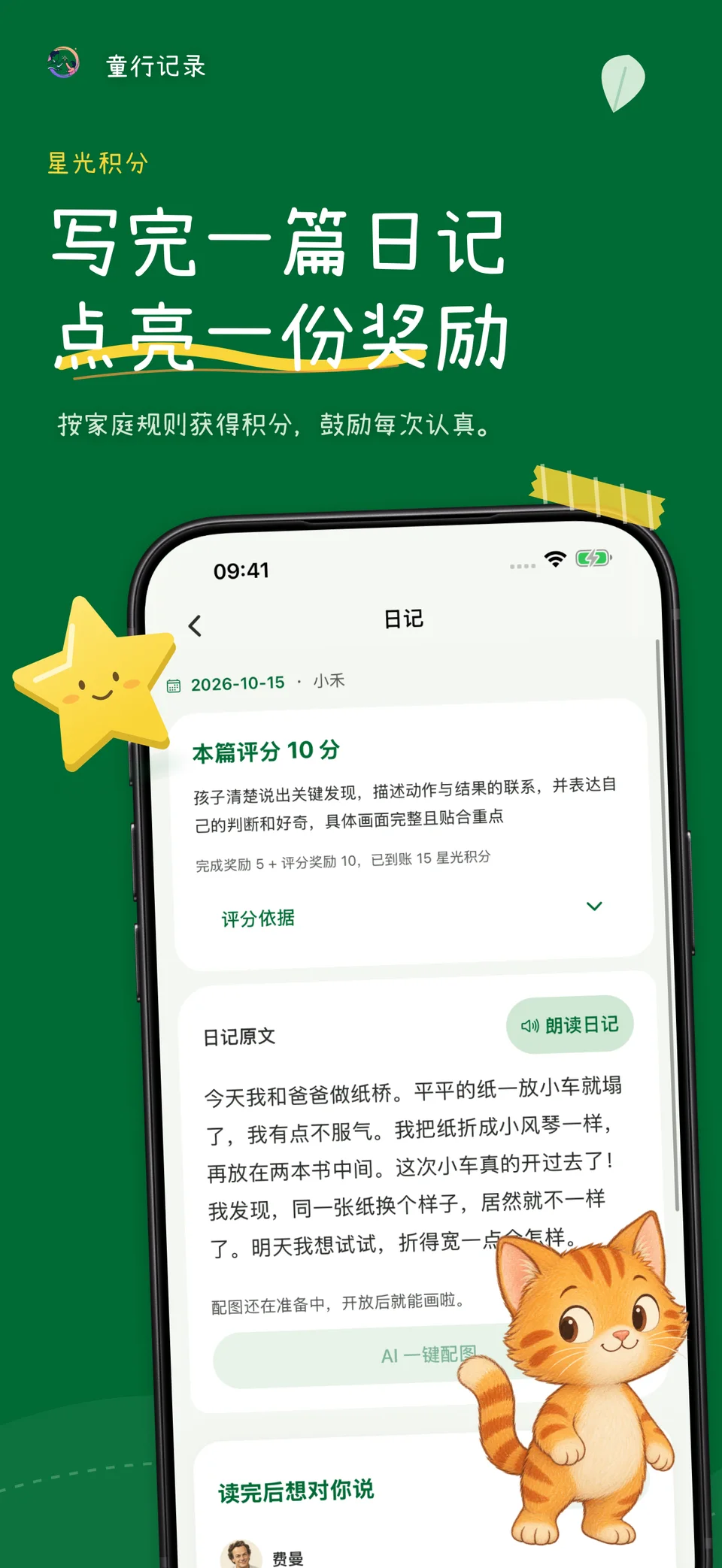
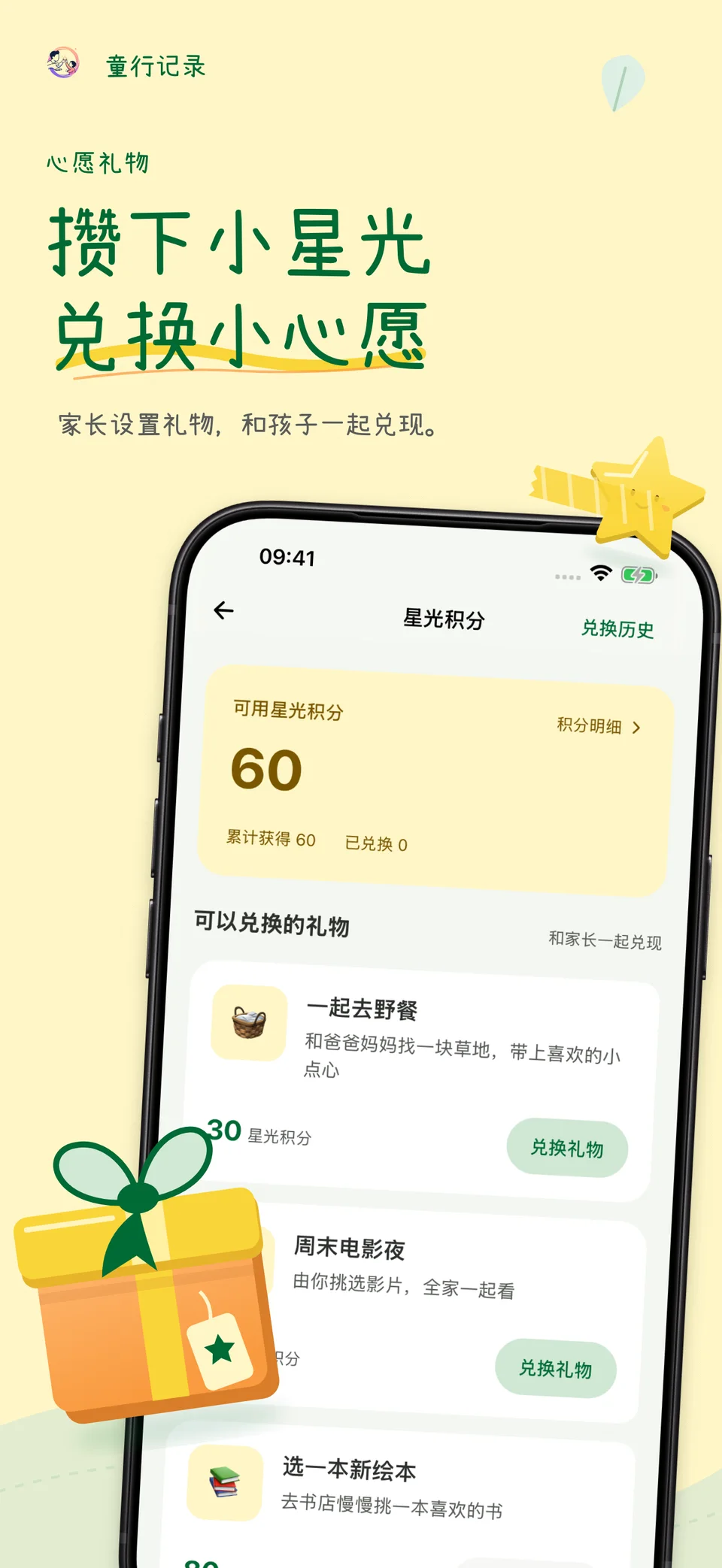
Chinese app previews use a fictional family and demonstration content.
Authorized records can reveal specific interests, approaches and situations where support helps. New experiences can add to or correct the current picture.
In these making activities, the child notices changes to materials and structure. When paper cutting becomes difficult, they may pause and seek help. Approaches and support needs differ by activity.
If something made you look a little closer today, you could keep one small discovery. Or write about something else.
Portraits use currently valid, authorized material for each audience. They do not reveal an unshared journal to parents.
How a child portrait developsNotice a connection, understand an approach or consider another perspective. Parents choose enabled perspectives; children receive one coherent, specific reply.
Parents can enable journal points and set family gifts. Children check their own wallet, request a gift and let a parent manage fulfilment.
Read the rewards and redemption rulesFamily reward scenario
+5 points
First eligible completion award
Writing assessment credit is settled separately
An example family gift
A craft afternoon together
Rewards require family setup and eligibility. Points, writing scores and portraits have different meanings. Families define and fulfil gifts.
Speak or write, at the child's pace. There is no need to cover the whole day. Specific feedback comes after finishing.
Try or skip a prompt, or start with an idea of your own.
Focus on the experience. Ask for help when you want it.
Finish and save. The original and AI feedback stay separate.
A companion responds specifically and may offer an optional method.
Nothing to write, a list of events, or a child who would rather speak: find an opening that fits.
Narrow the invitation from a whole day to one moment the child wants to keep. A falling paper bridge or the texture of a leaf can be enough. A child who does not want to write can stop.
Understand what is already there before deciding whether to expand it. A short everyday record has value. If the child wants to continue, one fragment can reveal an action, difference or connection.
Speak an experience first, then check the text. Voice removes the typing step, while the child still chooses what to keep, edit and finish.
The journal keeps the child's own words. Voice input is transcribed, and children can check and edit the text. A companion can explain an idea or offer a perspective or optional method. Feedback is stored separately and does not automatically rewrite the journal.
A companion responds to something specific in the entry: a connection, a detail or an optional way to summarize, express, compare or plan. Parents choose enabled perspectives. Complementary perspectives may contribute to one coherent reply. These are product-designed interpretations, not historical people themselves or a panel of real experts.
A portrait brings together currently valid, authorized journals, original parent records and saved conversations to describe specific interests, approaches, context and support needs. Relevant saved understanding can inform later guidance. Numerical observations are separate and use eligible journals and parent records; conversations do not add numerical counts.
Journal content and feedback follow the child's sharing choice. Unshared content does not become visible through portraits, chat history or parent summaries. Parent and child portraits use their respective source permissions. Parent records shared with children follow their own sharing settings too.
With the relevant family rewards enabled, the first eligible completion for a child on a journal date earns 5 completion points. The first valid writing assessment can add 1–10 points, up to 15 total. Completion credit is settled first; assessment may arrive later. In-app rules and wallet transactions determine eligibility and actual credit.
The app is free to download. AI conversations, voice, media and images have their own availability and usage limits. Current in-app subscription details apply. Family journal points are separate from AI allowances and do not represent model usage.
Start with a sentence the child wants to share.
Free to download. Current in-app AI availability, allowances and subscription conditions apply.